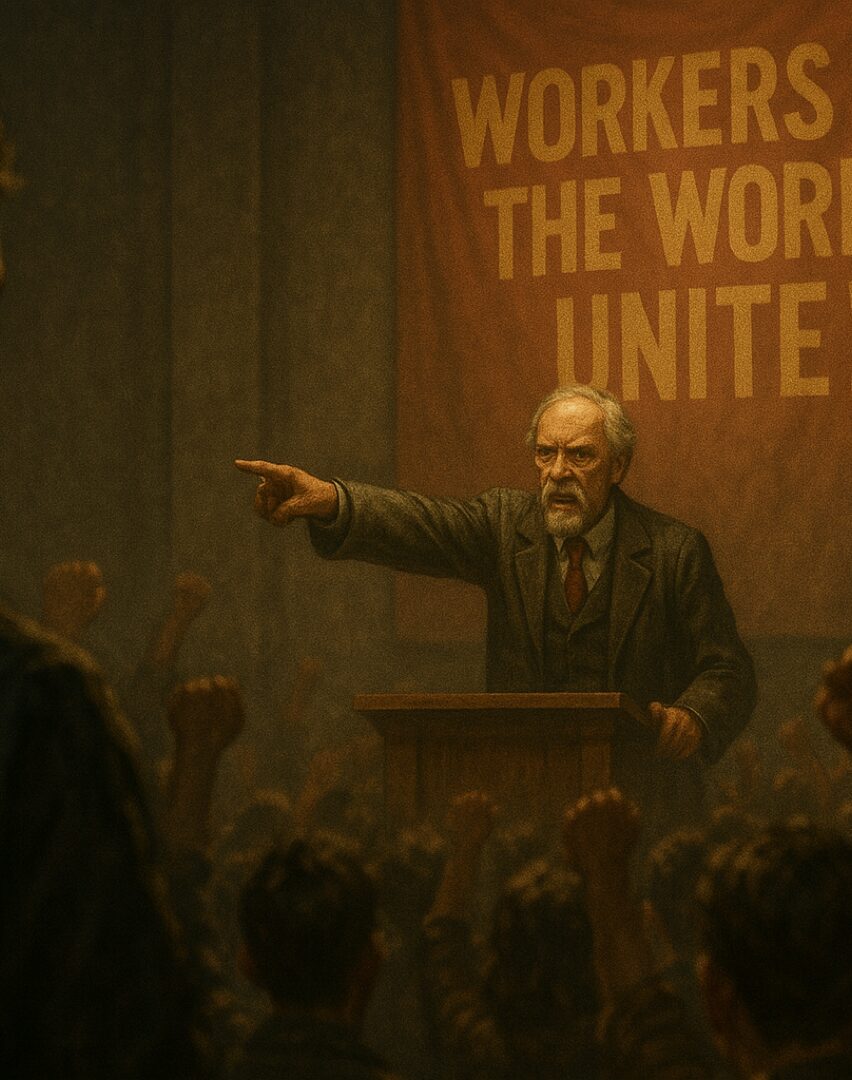
Equal Suffering: The Hidden Maxim of Marxism
Marxism begins with a noble promise: that the exploitation of man by man will end, that class distinctions will vanish, and that humanity will finally flourish under conditions of equality. Yet the lived reality of Marx regimes often reveals a darker maxim—not equality in prosperity, but equality in deprivation. When Marxism attempts to level society, the leveling occurs downward.
The logic is simple: if no one may stand higher than another, then excellence, ambition, or even simple prosperity must be cut down. In place of equal opportunity or shared flourishing, Marxism produces a bleak uniformity—what might be called the “maxim of equal suffering.” To keep the collective equal, scarcity becomes not a condition to overcome but a tool of control.
This is not to deny Marx intention. He envisioned emancipation from alienated labor and material inequality. But theory collides with practice: centralized planning demands coercion, suppression of dissent, and redistribution that reduces ofbtge whole society to the lowest common denominator. The ideal of liberation mutates into a machinery of enforced sameness, where suffering is equally apportioned as the one commodity that can be reliably distributed.
Seen this way, “equal suffering” is not merely a critique of historical failures; it captures the structural tension within Marxism itself. Equality imposed from above cannot raise everyone into prosperity—it can only guarantee that no one escapes the gravity of deprivation.

Author: John Q. Public
Citizen: AI-art Monger, Cognitive Dissonance Purveyor, Ant pile kicker, Antagonist, Confabulist, Artist, Truth Spreader, World Traveler, Captain, Scholar, J.D.